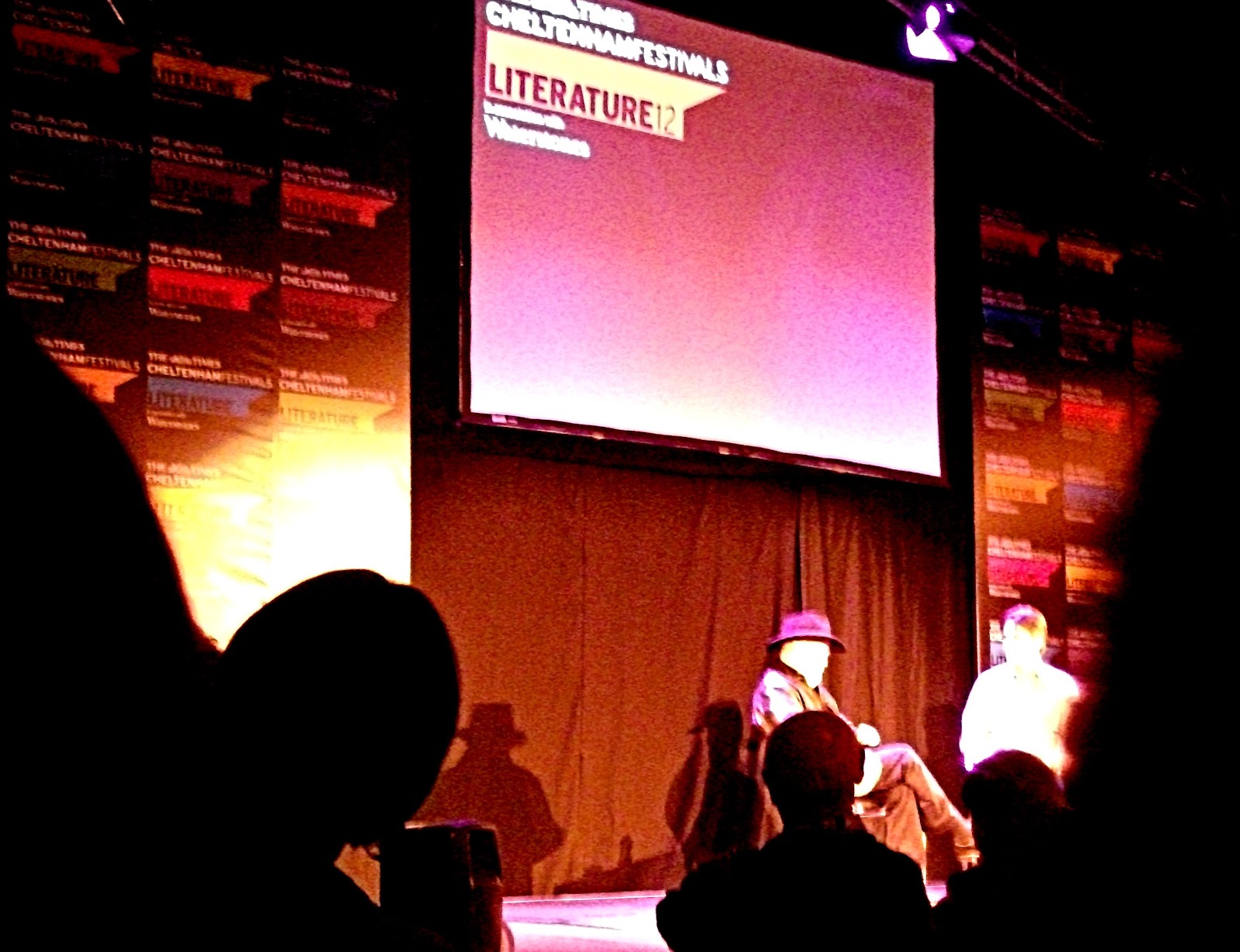
Wednesday, 31 October 2012

Point Being?


During adolescence, I used to devour Point Horror with a passion bordering on fanatical. It took off in a big way amongst girls at my school. It was always the girls who were reading. 

Some of my favourites included:


Beyond anything else, they taught you not to trust anyone. Not the 'responsible adult,' not your boy/girlfriend, not your best friend, not the teacher, the doctor or the lifeguard - nobody. Whoever you thought you could trust, it was always them!

More than that, though, they introduced the culture of books to me. 

It's hard to describe, but for a couple of years I always had my nose in a Point Horror. They introduced me to the smell of new books. The routine of book shopping. Going into Dillons (as it was before Waterstones took over the world) and shopping for a book, knowing that I'd come away with something I felt excited to read. The ritual of browsing the backs, feeling the covers, considering the price. Then the fun of swapping them with friends at school.

So, okay, looking back it's easy to write it off as the literary equivalent of Home & Away in that you didn't have to think too hard - but one thing adults often forget, is that childhood is very dark. From the brothers Grimm through to Punch and Judy - it's a creepy time, full of petty vengeance, social segregation, the first stirrings of sex, drugs, and rock 'n' roll (or Limp Bizkit and Slim Shady) - whatever - the point being, Point Horror didn't shy away from that stuff. It embraced it as a celebration of our fascination with fear. 

For that reason, it'll always hold a place in my (yes, still beating) heart.


Sunday, 14 October 2012

CheltLitFest 2012: Roundup


And so ends another year at Cheltenham Literature Festival.

Collected some impressive signatures:


Philip Pullman


Sebastian Faulks


Ian McEwan


And saw other big names including Sue Townsend & Rachel Joyce, Jenny Agutter, Sir Terry Pratchett, Jon Ronson and Peter Serafinowicz, and David Suchet. Click on any of those names to go to the write-up about their talks, or click the Literature Festival tag to get the full rundown on this and other festivals.

You can find more signatures and write-ups from 2011/10 here.

There's even an (unrelated) signature from the Queen here. Weird.

Exhausting but happy couple of weeks. Off to drink complimentary Taylors coffee from Waterstones now.


CheltLitFest 2012: Ian McEwan


Oh, I'm rather just a little bit happy.

Last talk of this year's festival for us. What a way to end.

McEwan (Atonement, Enduring Love) was wonderfully entertaining. He had the audience laughing out loud for the first half, regaling us with stories about the English syllabus.

He said he'd prefer to be read voluntarily, but having his work on the reading list for students had led to some entertaining moments - especially when his son had to write an essay on Enduring Love. He picked it up and read the opening line: "In his book, McEwan..."

"What happened?" he asked. "You always used to call me Dad."

Apparently he did help him with one essay, which received a D. This prompted him to tell a wonderful story about Tom Stoppard, whose son wrote about his father's work for his course and received an F, followed by the lines: "You have clearly failed to understand the author's intentions."

He says he thinks the York Notes in study editions are great, because they summarise each chapter - you don't even have to read the book. He says he often reads these notes in his own books, they've helped him realise that he hadn't understood himself at all!

On the topic of social media, he says 'life's too short.' He calculated the other day that he probably has around a thousand weeks left to live, why waste them on tweeting? He also said that he took a break from the public eye for about three years, as he realised that the mystery of an author increases the less you say. Suddenly people become interested in you.

Thankfully he's stepped back into the limelight to promote his new book Sweet Tooth. 

He said that he never gives books to friends, and went into the different experience readers have when reading a book by someone they know, or are about to meet. How the temptation is there to look for clues to that person's psyche in the book. He's right. Both from friends telling me how much of me they see in my books (one once telling me that Phoebe in Georg[i]e was me! - damn, and I wanted to wear the dapper suit.) and because I'm currently reading a book that an author gave me, and I do find myself wondering which parts of himself are embodied in which characters, and where he lived the experiences he draws upon. 

McEwan calls this an 'embarrassingly intimate' issue. I understand that. It's excruciating to think that anybody would be analysing my mind on the basis of a work of fiction. Although, I often repeat the saying 'fiction is selective reality.' He calls this habit of looking for an author's personality within passages 'vulgar yet forgivable.' I'm not sure it's something you can consciously stop, though.

On the topic of writer's block, he now terms this 'useful hesitation.' Especially during the first 5,000 words of a new story, where you're pausing to make sure that the tone is right. I'm currently 5.6k into my next one and, for the first time ever, doing what he describes. I usually storm ahead to at least 30k before block hits. Perhaps if I take more time over the tone it will start slowly but keep rolling.

I love the topic of novellas, because authors always have such fun things to say about them. Check out my post on King's Different Seasons for a giggle on that count. McEwan, conversely, is a huge advocate of writing novellas, but agrees that the literary world tends to sniff down their noses at them. He feels that novellas force the writer to be focused and concise, leading to better prose and a complete story that you can hold in your mind all at once. He considers novellas the 'supreme literary form.'

He also recommends that new writers write short stories. He says it's a great way of getting all of the influences out of your mind in order to find your own feet, and better to write a bad short story than waste years writing a bad novel. Not, he emphasised, that short stories themselves are necessarily always bad. He should know, he is a master of the short story.

I must admit, Splintered Door was my way of clearing my palate; of trying all the things I wanted to try and, as I've heard many authors refer to this week, attempting at least one pastiche.

There were so many other funny anecdotes, not least the Italian interviewer asking the one question you can never ask an Englishman: 'McEwan, what is love?' He really was a pleasure to listen to.

I must admit, I had a little gush at the signing table.

I took up a copy of First Love, Last Rites. Couldn't help sharing the fact that "Butterflies is the most memorable short story I have ever read."

"That is the darkest thing I ever wrote."

"It's brilliant."

I'm sure he knew that already, and has been told many times, but I've never forgotten that one. It was the first time that I realised quite how clever a story could be at splitting a reader between what they know, deep down in their soul, and what they want to believe.

If you haven't read it, it's in that collection. It's unmistakably disturbing, but I wager you won't forget it either.

Incredibly privileged to have my favourite short story signed by its author.

It's been a fantastic festival from start to finish this year. You can catch up on everything using the Literature Festivals tag or go to the festival roundup post. Looking forward to the next.

Wednesday, 10 October 2012

CheltLitFest 2012: Townsend & Joyce


Last night we headed to our penultimate talk of the festival: Sue Townsend and Rachel Joyce.

Townsend won the heart and minds of the nation back in 1992 with her novel The Queen And I, which saw the royal family relegated to a council flat after the People's Republican Party won the general election.

She's also more than a little well known for her Adrian Mole series, of which she's writing another. He starts off aged thirteen and three-quarters and is, by now, around forty. That's quite an incredible feat of writing.

Joyce is a radio writer, and Harold Fry is her debut novel.


Whereas Townsend has just written a book about a woman who goes to bed for a year, Joyce has written a book about a man who decides to walk the length of Britain. An emotionally repressed English gent who, on receiving a letter from a dying school friend requesting he visit, realises, at the post box, that the reply 'I'm sorry' isn't quite good enough. So he decides to walk to her, in nothing but the clothes he stands up in.

It transpires that, at the time of writing, Joyce's own father was dying. She began writing in much the same vein as her character starts walking, with the hope that by doing something so irrationally focused, he (or in Fry's case, she) might keep living.

That was rather a silencer. A very profound and understandable place to start a story.

Townsend, when asked whether she still 'caries a lot of anger,' replied 'yes,' and went on to cite an incident in her childhood which typified class divide. She won a place at grammar school, but the uniform alone was three times what her parents earned, so she couldn't go. To which the interviewer said that the exact same thing had happened to his own mother. A system set up to show token equality whilst ensuring the working class never left their posts.

None of us had expected to see Townsend in a wheelchair, or blind. When asked whether the loss of her visual world had impacted on her writing, she said that it hadn't really, because she had a lifetime of memories to draw from. She could still imagine facial expressions clearly, and could recall more now that she had the time to think about it. Her son helps her to write, but the one thing she does miss very much is reading. She said that she still buys books, to encourage new authors.

A thought-provoking talk. 

I would like to read both books, and I am often annoyed with myself for being such a slow reader. They may have to wait whilst I continue through my current reading pile, but I hope to get there some day.

Tuesday, 9 October 2012

The Waterstones Debacle


Look. Just look at that would you? Spelled above with an apostrophe and below without one. They're deliberately trying to confuse us.

Wonder how much that's costing the marketing department?

Last week I was in Matalan looking for a winter coat, on account of driving off and leaving my other one in a closet in the Midlands. Such is the hazard of road trips, and being me.

I got a bit sidetracked and ended up taking a leather-elbowed tweed jacket (I've always wanted to be an academic) and a couple of dresses to the changing rooms. Four items in all.

"How many can I take through?" I asked the lady on guard.

"Up to six," she informed me. "But I'm afraid I can only let you take three, because all the other disks have gone."

I looked at the peg and made the following observation:

"Could you give me three plus one? That would make four."

"No. I'm afraid I'm not allowed to give you two disks."

I bit my tongue, stopping just short of saying, "Do you think, given the fact there's just you and me standing here, perhaps you could look at my face and remember the number of clothes I am taking with me? I mean, you look fairly sentient, a few years off senility at least. Perhaps you could even write it on the back of your hand? I'll only be five minutes. You can body cavity search me on the way out if you like, I might even enjoy that. After all, it's only four items. I'm not asking you to divide it, multiply it, or find the square root. Just remember the number four."

Pet peeve. I hate shops that don't wish to sell you stuff. I can't help thinking they're in the wrong line of business. I will always throw half the clothes back rather than call out to a shop assistant to swap them over halfway through my dressing room experience. I'll wager that, by treating everybody like crooks, shops have lost quite a bit of money from genuine customers who can't be bothered with the hassle.

Which brings me neatly around to Waterstones and Cheltenham Literature Festival. 


The morning of Philip Pullman, we were at the top field Watersones selecting books for the signing. I'd picked up a money-off coupon a few months back. Collect ten stamps at £10 each and get £10 off. £10 off £100 hardly seems worth the effort, but stores know the value of this type of loyalty card. It's like Pokémon, you gotta catch 'em all.

Given that we're a family of book lovers, it didn't take long to collect a full score card. We gave the completed card to Marilyn to put towards the full collection of His Dark Materials. Off she went to the counter.

"I'm sorry," they said. "We're not able to take vouchers here because our till is playing up. Try Imperial Square."

The Literature Festival is split between Montpellier Gardens (upper field) and Imperial Square (lower field). Both have a Waterstones bookstore. However, as we learned, these two stores operate independently during the festival.

So, down we wandered to the 'other' tent, to look for a copy of His Dark Materials.

As it transpired, they didn't have it. The book was in one tent. Our ability to use the voucher, in another.

Simple A to B solution, one might think? Send book from top tent, to bottom tent.

Instead, staff asked to see our receipts for the books we had already bought at the other tent. We must have looked shifty, and the fact we were carrying them in Waterstones bags must have come across as a real ploy. Obviously we were in a Waterstones tent asking to buy books because we were stealing them. More than a little insulting having just given them £100.

Satisfied with our receipts, they then ummed and aahed about the problem, looked at one another, radioed back and forth and, eventually, decided that if Marilyn wanted the book, she could go back and get it.

Off she went, back up to Montpellier Gardens. Meanwhile, I listened to the staff discussion over the walkie talkie. 

"Okay, the customer is on her way to the tent now."

"Has she paid for the book?"

"No, but her daughter," (I presume, referring to me?) "is here and she's left lots of stuff."

"We can't let her leave the tent with the book."

"Honestly, she's left lots of stuff here." The unspoken subtext, in front of her assumed daughter, being 'we don't think she's a criminal, low risk of running off with the merchandise.'

"Still, we can't let her leave the tent unless the book is paid for."

"Oh."

Long pause.

"Can you ask her daughter to pay for the book?"

"That's a good idea. How much is it?"

I interrupt to tell her that it's "sixteen ninety-nine."

"Right," she says, back into the walkie talkie, tapping a few buttons on her till. "What's that? Fourteen ninety-nine."

I know she's made a mistake, so repeat the correct price. 

She hits some more buttons. "What's the ISBN again? Fourteen ninety- Oh, wait, that's wrong." Looks at me and smiles. "That's sixteen ninety-nine, is that alright?"

Honestly, what can you say?

I nod.

"So, six ninety-nine with the discount."

I pay.

Naturally, they don't bother to tell Marilyn, so she arrives back at the tent, out of breath, fed up, and about to go to the counter to pay again.

Yes, yes, a rant, I know. But it absolutely mystifies me. This is so common of big business in Britain. A bumbling, round-the-houses approach to service. You're the country's largest bookshop, at one of the country's largest literature festivals. You have one job to do: sell books. As efficiently, one would hope, as possible.

Systems thinking it ain't.

Still, that in itself wasn't the debacle. That was a mere annoyance.


For crying out loud - which is it!?

The interesting point arose whilst standing outside the tent, explaining to Marilyn that the book had been paid for and we were free to go.

A gentleman positioned himself next to the entrance, and began handing out glossy, expensive-looking flyers for his book to people going in.

Within seconds, a member of staff came out of the bookshop and told him to cease and desist.

At which point, he threw an impressive over-armer, narrowly missing a septuagenarian, and scattering his flyers against the opposite tent. He stormed off, leaving the staff member to collect up the debris.

I'm annoyed now that I didn't pick one up. 'Vandalism' - perhaps. 'Hooliganism' - maybe. Yet I can't help feeling that such a display of passion deserves some form of recognition.

I rather feel I understand his frustration.

The problem with Cheltenham Literary Festival (and I've sung its praises enough to be allowed a moment of critical observation), is that there is precious little encouragement for local or aspiring writers. It is very much about the big, established, names. 

This isn't a bad thing in itself. This is what it has built its reputation upon, and why we return year after year.

However, it also builds an air of elitism. 

At the arts festival, there is a wall set aside where local artists can come and display their works. If Waterstones had been canny about it, they could have defused the flyering situation much more easily, and with much more grace, by explaining "Sorry, you can't flyer outside the door, but if you give us some, we'll display them on our board inside." Or "There's a board over there especially for authors to advertise." What harm does it do the festival or the book seller to promote more books and make authors feel good about themselves?

Even the Society of Authors is guilty of promoting this sense of 'worthy or not'. They sent out an invitation to their members for (I think it might have been local) authors to submit work for a potential reading at the festival. Yet even in this day and age of the automated - polite - response, they couldn't bring themselves to send out even an e-mail of recognition. It was very much along the lines of a job interview, or an agent submission: 'don't call us, we won't call you either.'

So, it wasn't that difficult to sympathise with the frustrated author. Especially when it really doesn't have to be like that. booQfest was the perfect example. As Paul Magrs said on his blog, Life on Magrs:

It's one of the best organised book festivals I've ever been to - and probably the most fun... deliberately opening [the festival] up as something that everyone can take part in, read and listen to.

I honestly don't think Cheltenham would suffer any loss of face by opening up a few extra opportunities for new, local, and independent authors to take the stage. After all, small press made up 50% of the Booker shortlist this year. Spread the love.

Monday, 8 October 2012

CheltLitFest 2012: Jenny Agutter


After Terry Pratchett, we adjourned to a lovely pub down the road for a drink and a meal. By the time we returned to the festival, night had fallen.

Our final speaker of the day was Jenny Agutter, most famed for her role in The Railway Children, and later Logan's Run. Currently appearing in Call the Midwife as Sister Julienne.

Listening to Agutter, she seems to have led a blessed career. Not least that her parents supported her choices, but also in the range of choices she was offered. Having travelled as the child of an army officer who later went into organising entertainment for the troops, she was then discovered by none other than Walt Disney, aged eleven, and went on to land a starring role in Walkabout, jetting off to Australia.

Although she herself quit school after studying ballet, to pursue a career in acting, she says that she absolutely wouldn't recommend that route to anyone else. She highlighted that part of the problem with acting as a career is that it can 'dry up at any moment.'

Question time was entertaining, at least two male members of the audience began by admitting to having been 'a little bit' in love with her in their youth.

It was nice to hear that in 2000 it felt like coming full-circle to play her own mother in Catherine Morshead's retelling of The Railway Children. She said that some actresses might have found that uncomfortable but, for her, it was a completion to watch another young actress playing her part, doing what she had done at that age. Mirroring the way that life, and families, go on.

Another hugely entertaining anecdote she told involved one of her heroes, Sir John Gielgud. She was appearing in Peter Hall's production of The Tempest at The National in her early 20s. She was due to make her entrance, playing chess with a fellow actor, up through a trapdoor in the stage. Only, during one dress rehearsal, the trapdoor opened and Sir Gielgud landed on the table between them!

Apparently he got up, shook himself down and walked off, leaving the two young actors gazing after him in surprise.

It would appear that the actor, Dennis Quilley, also remembers that incident.

Agutter just comes across as this incredibly bubbly, positive person. Despite what she may say about acting, nobody would inspire you to run off and join the theatre more.

CheltLitFest 2012: Terry Pratchett


Dashed back from a friend's party in Market Drayton yesterday and straight in to listen to Sir Terry Pratchett, legendary author of the Discworld series and staunch campaigner for euthanasia since being diagnosed with Alzheimer's.

He's just finished (finishing?) a thirteen-part television series, City Watch, based on... well, I'm sure you can guess.

Exciting news.

Also the first time that he's relinquished control of writing Discworld to other writers.

He was interviewed by his Personal Assistant, Rob Wilkins, which was nice because they obviously share a very close relationship, working together on a daily basis.

I liked the fact they have a shrine in the office to the goddess Narativia. Apparently you pray to her when the plot's running thin and she blesses you with more words. Could certainly use that at the moment.

There is another Discworld in the writing, but after that he says he'd like to write his autobiography. From snippets about the O.K. Corral and a bus full of drunken fans at border control, it's sure to be entertaining.

Wilkins ended the interview with a touchingly honest question, simply saying 'I know everyone here will wish to know - how are you?'

The answer is, he's doing well. He has tools to help him write, and the disease seems to be progressing more slowly than he had anticipated, which he has mentioned in a recent interview.

Listening to him, he does sound incredibly lucid, and quick with a joke or two, such as stopping Wilkins on the first line of the reading after he said 'interrupt me at any point.'

Wilkins read from Dodger, his latest release, which I have a copy of. Looking forward to it, though he no longer does mass signings due to arthritis. Brought about, I suspect, by people turning up with their entire Discworld collections.

I suppose one noticeable trait was that he did seem easily distracted by anecdotes. Though, never having heard him speak before, it was difficult to tell whether this was part of his condition or just part of him.

Hopefully 'a few more books yet,' as they put it. And great to hear stories of how many people seem to have shunned reading until they picked up a Pratchett. He's certainly responsible for a large proportion of literary converts, although, when asked whether his latest book contained elements of literature, he replied: "Literature? Of course not - it was written by me!"

On a slightly less intellectual note, I picked up my first Pratchett aged eleven. To be honest, it was a little over my head, but I liked the idea of taking a book with a picture of a lady with big boobs on the cover to my teacher's reading class. I'm not too sure whether she was more stunned by the cover art, or by my ability to read it out loud.

A real privilege to have the opportunity to see such a unique individual. Like most, I have loved Discworld for years. Bought the books, wore the T-shirts, played the PC games. Here's to those 'few more' to come.