Happy Valentine's Day. Some books to do with love, romance, and romantic disaster!
Showing posts with label juicy reads. Show all posts
Showing posts with label juicy reads. Show all posts
Saturday, 14 February 2026

Saturday, 20 December 2025
Best Books of 2025
A wrap-up of wonderful reads over the past year on Books Songs and Other Magic. I'm in this! Somewhere around 33:40. If you're looking for your next book pick, there's some excellent suggestions.
Wednesday, 12 November 2025
Expat Booktag
Hi everyone. I decided to do a booktag Q&A about being a British expat in Rwanda. The tag was started by ReaDANculous. You can find his original video here.
Friday, 31 October 2025
Howling Halloween Book Tag
Welcome to my Howling Halloween book tag. Let me tell you all about my faovurite horrifying and haunting reads, from short stories to terrible tomes. Tell me yours in the video comments.
Thursday, 15 May 2025
Dragon Book Tag
Going for a triple whammy with three book tags covering topics such as 'do you re-read books,' through to themes of fantasy and springtime. Check the video description on YouTube for more details on who started the tags.
Tuesday, 31 December 2024
2024 Wrap Up - Best Books I've Read + Christmas Music Book Tag
Join me in the lunacy of New Year's Eve, reviewing the favourite things I've watched and read throughout the year. I finish up with a little book tag relating to Christmas books. The prompts are in the video description, so feel free to play along in the comments.
Tuesday, 31 October 2023
Thursday, 20 April 2023
#IndieApril 2023 - Talking About My Books
This year I've done a set of talks on YouTube about my books, explaining where the ideas came from, what it was like researching and writing the books, and how I feel about them. I'll leave this post at the top of the blog throughout IndieApril and add each video below as it comes out. This runs from 1st-30th April. If you enjoy any of these videos please give them a like, and if you'd like to follow me on a new adventure around Europe, consider subscribing.
.
Monday, 20 March 2023
Spare
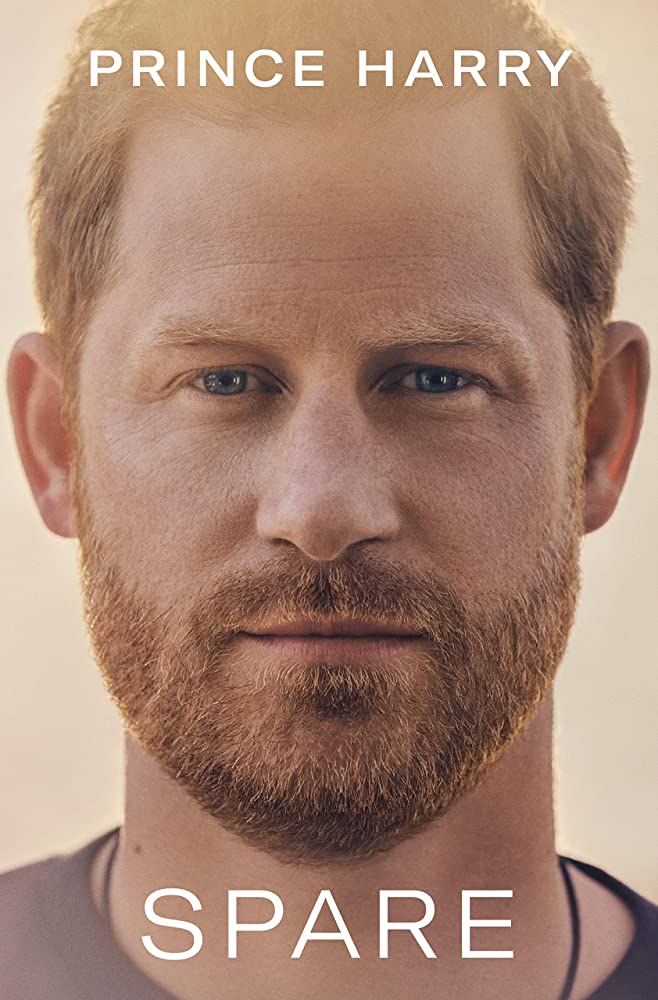
Wrapping up the third biography I've read this year: Spare. This is the autobiography of Prince Harry.
Like the Depp v. Heard trial, I started out with no interest in this what so ever, but then found myself sucked in after watching an interview with him on Colbert. I thought he came across rather well. Human, British, confident but with humility.
I am not a monarchist, you can't defend that level of wealth and privilege in a world, and a country, where so many have so little. A country in which food banks outnumber McDonalds, and there is an online map to find your local 'warm room' if you can't afford to heat your home in winter. There is no argument that defends this idea of respecting a person simply because of their family name. We are all individuals and should be judged on our own merit. Harry does make the argument that the royal family contribute to the economy in terms of tourism, but does that wealth go to the common people? Is it feeding people and heating their homes, or is it going into the back pocket of government?
So, no, I'm not a monarchist, however, given the current abysmal state of British politics, I can't really make the case for a republic either. I don't think it's the monarchy standing in the way of Britain's self-actualisation, government seems to be handling that all by itself. There is the old joke, 'better to have one arsehole in power than a bunch of them.'
So, I'm fairly ambivalent at the moment. Because of that, and not having a particularly vested interest in the situation one way or another, I don't get angry about it. There isn't an ounce of vitriol in me on the Meghan/Harry issue. I actually really liked her in Suits, and I recognise there's a clash of culture. She admits she didn't go in prepared, didn't do any homework on the royal family, so it's not really a surprise what happened. And, to be honest, I very much believe people have the right to follow their own path. If the situation you find yourself in makes you miserable - change it, in as drastic a way as necessary. I honestly don't see why that makes people so angry.
As far as the book goes, as a writer I respect anybody who takes the time to put their perspective into words, that others might better understand their point of view and reasoning. I think Harry did that fine. A friend pointed out it was probably ghostwritten, but as someone who has ghostwritten other people's biographies, I know the process, and the words belong to the subject. You spend a lot of time listening to their voice, their stories, recording what they say - a book that is ghostwritten isn't just someone else making stuff up. A good ghostwriter uses the words and nuances of the person speaking.
Anyway, I thought it was interesting and well written. He had every right to write it, nobody has to read it, but I did and I enjoyed it. He has a good sense of humour, and it came across.
I was studying the art of destruction, and the first thing I learned was that destruction is partially creative. It begins with imagination. Before destroying something, you have to imagine it destroyed, and I was getting very good at imagining the Dales as a smoking hellscape.
I'm sure many people have had a similar vision.
I'm also sure a lot of people can relate to parts of this. Not the privilege so much, but the sense of being born into a family or situation where you don't quite fit, and however hard you try to mould yourself into what others expect you to be, you never quite achieve it. Happenstance of birth is exactly that, and, as a living, breathing entity upon this planet, you have every right to go in search of your own happiness. No one says you have to stick around and be a spare, whether you're a prince or a pleb. It disturbs me how invested such a large portion of the world is in institutions like the British monarchy and how extremely seriously they take it. I could understand that obsession more if they were invested in the redistribution of wealth, but they're usually more invested in upholding that institution without review or reform.
Enough proselytising. Which ever side of the royal debate you land on, I think this is an interesting biography and easy to read. If it's going to make you mad, don't bother, but if you're curious to hear his side of what happened, go for it. And on we move to another book...
Thursday, 16 March 2023
Gentleman Jack
 |
Second of three biographies I've read recently.
Slight spoiler at the end of this one, if you don't already know about her life.
I fully wanted to adore Anne Lister's biography. To leave behind a room full of encoded diaries outlining the steamiest of sapphic sexual liaisons, and to be so thoroughly, completely herself... plus it's narrated by Heather Peace, known for so many wonderful things, but especially Lip Service. I was fully invested in her story, but...
She had a lot of spunk, a huge amount of beautiful arrogance and fire, but she also seemed to channel the worst misogynistic tendencies of her age. What a dualism. An icon of sapphic history, with the same desire to string the girls along, break hearts, and marry primarily for money as a total cad. And a staunch Tory to boot.
I know, she was a product of her time and station, but that didn't make it any more palatable.
It's a very thorough biography, but I began to flag a bit in the midsection. It became an ongoing list of how many kisses (orgasms) she'd given to each woman, how good they were, and how often. Salacious at first, but about as interesting as a shopping list by the end. I would have liked to learn a bit more about the world she inhabited, the politics and prejudices of the time. There was a bit of that, but more might have helped to flesh out the story and place Anne within a wider context. Overall though, a very thorough and informative story.
She was certainly a traveller, and on one point you really felt for her. She was officially the first person to complete the ascent of Vignemale, the highest peak in the French Pyrenees. She was up against a rival, the Prince de la Moscowa. She beat him to the top by four days, but, with a little bit of bribery and testosterone, the prince was reported in the world press as having been the first to the summit! This was only corrected in 1968.
...even today the route that Anne took to the peak of the Vignemale on Tuesday 7th August 1838, is called Prince de la Moscowa.
Thankfully, the Wiki page for the Vignemale clearly sets the record straight, recording Anne Lister as the first person to reach the summit and making no mention at all of Prince de la Moscowa. May he slip into historical obscurity for such a dirty stunt.
There were some other interesting moments, or synchronicities, I spotted. The book mentioned Nizhny Novgorod, and a visit to the hareems. It was fascinating that she had visited that place, as it was mentioned in the first chapter of Those Rosy Hours at Mazandaran. Whereas I had to imagine the hareems, she actually saw one, referring to the inhabitants as 'human animals':
...except in [an] asylum for insanes, I have never seen any sight so melancholy and so humiliating as this hareem. They are not admitted, or capable of being admitted, into society. How terrible the degradation of one half mankind.
There was also fleeting mention of Prince Pückler, of Pückler Park fame, now on the border of Poland and Germany. I visited the place years ago whilst on a writing retreat.
She really came into her own in later life, and I suppose I sympathise a little. It can't have been easy in a world where who you married dictated your social status and future prospects. Channelling what, for the time, and even today, were considered masculine traits, it's only natural that her mind would be occupied with the same considerations Mr Darcy went through when considering Elizabeth Bennet. But I liked Darcy a lot more, because he put that consideration aside in the end, whereas Anne appears to have been consumed by it. No matter how much she loved someone in the moment, she was willing to discard them if they didn't earn enough. Maybe that was just an excuse, though. She seemed extremely restless. Seeking the ideal soulmate and perfect companion, so idealised that no one ever quite managed to live up to it. She wanted the money to continue travelling, and she milked her partners for whatever they would give, but perhaps their lack of status was just a convenient excuse she allowed herself to keep looking for 'the one.'
It's a human condition that many would relate to, but it was a little irksome at times, and my interest in her life dwindled a little for that attitude. She wasn't particularly pleasant, though nothing ever said she had to be, and perhaps we don't get all the story from her writings. Perhaps she was giving play to a part of her that liked to over expose, and to play the provocateur. Maybe she was a lot nicer in person. We shall never know. And, either way, it's a hell of a legacy to leave for posterity and we're grateful.
So, the spoiler... she just died.
Seriously, it was a fucking abrupt end to a book.
There she was, climbing the Pyrenees, galivanting through Russia, being taken aghast by pagan Buddhist ways... when she just upped and died. Seems she exercised obsessively and hardly ate a thing, and in the end her body just gave out. But there wasn't much forewarning. I was sitting there waiting for a conclusion and that was pretty much it - The End.
So, uh, I guess to match that sudden finale.
Bye.
Wednesday, 15 March 2023
My Thoughts Exactly
 |
Continuing the book review catch-up. I fucking love Lily Allen.
I was enjoying Stranger Things and heard that she got engaged to David Harbour (the guys who plays Hopper), which was intriguing. Then fell down an absolute bottomless hole of nostalgia, rediscovering all of her big hits on YouTube, along with some of the lesser known ones (or probably only lesser-known to me because I was already out of the country by then), like Our Time and URL Badman. Plus catchy oldies, like Driving Me Wild... is that SmartArt?
Then I stumbled across the stalker interview on BBC Three, which was disturbing, especially the MET response at the end. Really not an acceptable approach for them to take, it sounds like she had every right to be dissatisfied at that point.
Anyway, I saw she had a biography out and decided to get the audiobook, narrated by her. I have to admit, I hadn't listened to her music in years, but then I don't really listen to anyone much, not having a radio or keeping up with western pop culture. I occasionally pull up NPR Tiny Desk concerts on YouTube, but my own music collection hasn't been updated in about fifteen years.
That said, she was a constant backdrop to my mid-twenties. I was 25 when LDN dropped, and The Fear and Not Fair released the year after I left the UK, so I guess I was doing my MA. But it's weird, she's one of those artists who time shifts. I associate her with college. I was at the BRIT school when it first started up, so a few years before Adel, Amy Winehouse and Kate Nash, so unfortunately never met them, but Lily Allen's songs just remind me of a sunny London afternoon. She kind of evokes the spirit of that time in my life, even though she started releasing long after I'd left and moved to Cardiff. I remember really liking all of those songs, and I remember a lot of my female friends laughing when Not Fair came out. It was like every woman had had a relationship like that and thought she was bolshy for having the guts to say it. I think it led to a lot of uncomfortable conversations.
Looking back, nothing she said was that shocking by today's standards, but she was ahead of the curve. It's hard to overstate how hideous British lad culture was in the 90s and early naughties, egos bruised very easily and she had a knack for finding the fragile ones. As a result, the tabloid media absolutely went for her. Every other week it seemed they published a picture of her leaving a party in a bad state. That intensified after the Elton exchange.
It was exhausting. Nothing I was saying was particularly controversial or out of the ordinary. But I was a young woman in an industry that preferred its females compliant and subservient, hungry – and preferably a bit cold and shivery on account of not wearing enough clothes. Vulnerable, in other words, and therefore more pliable and easier to get in line, that line being that what sells is youth, sex appeal and a lean bod, with no unsightly flabby female bits: not of body and not of mind. I wanted to rail against all that, but I was also a needy young adult learning how to process everything I was learning. I insisted on not being objectified, and yet, oh God, I minded that I wasn’t being objectified enough. I hated that young female singers were being reduced to objects of desire, and yet I longed to be intensely desired myself. I was twenty-one years old with not much experience under my belt. I was messy, needy, narcissistic, fearful. I was outraged, outspoken, fearless. I was defensive one minute, didn’t give a shit the next.
*
I don’t think that the men who run the tabloids and who berate me on Twitter like women much. Not just women, either. I think they’re scared of anyone who isn’t like them, who isn’t white and middle class and male. Because those men who run things, they aren’t necessarily cleverer or better than everyone else, but for some reason they’ve managed to make all the rules for hundreds and hundreds of years. No wonder they’re resentful and defensive when the rest of us are angry and have decided that we want a bit of what they’ve got. So it’s like, ‘NO. You can’t have a piece. You’re disgusting, you’ve got a vagina. No, you’re not having any of it, either, because you’re black and you’re a criminal. And you? You’re Asian, you’ve probably got a bomb under there, so you’re not allowed any of it, either. You’re all threatening to me so I’m going to vilify and bully you as much as I can to silence and shame you.’
I don’t want to be silent. Women have been silenced for millennia, and I’m not going to be part of that. I want to speak up, and if that means I sometimes get it wrong, then I should be able to correct myself, apologise, move on and still carry on speaking up. As a woman, I’m not meant to be an angel or a saint or a martyr or to have faultless encyclopaedic answers all the time. I’m a woman only, and, like all women, I don’t ask for special treatment. Like all women, I just ask not to be repressed or silenced.
I’ve never been saintly. I know I’m a narcissist. I can behave badly. I’m capable of self-sabotage and self-destruction. I have a history of mental illness, drug abuse and addictive behaviour. I can be petulant and spoilt, short-tempered and stubborn. But even when I’m deep in foggy, cloudy behaviour, numbing myself with whatever I can, some part of me remains self-aware. I’m hyper hyper self-aware. It’s what has kept me from going under. I’ve sometimes felt like I’ve been drowning and lost and as if I’ve disappeared, but I’ve always stopped myself, even if it’s in a destructive way with drugs, or hospitalisation, from losing it completely.
It was really good to hear what happened in her own words. A lot of women can relate to what she's saying, and she puts it across really eloquently. There was always an honesty in her music, so it makes sense that translates to the page, and people connect with it.
She went through some really difficult life experiences, and I think that's maybe why people have gone so gooey-eyed over the recent wedding, because she does seem happy and settled. You want good things for someone who has been so persecuted for being feisty. You want them to have a strong base to continue mouthing off, because we like listening to her. She doesn't hold back, and that's inspirational. I think she's always had a lot more love from the British public, and especially women, than the tabloids would have ever let you know. She was well ahead of her time with her music.
Great biography, worth a read.
[PS, Game of Thrones trivia. Her brother is Alfi Allen who played Theon Greyjoy. Early on she made a song about him and apparently he's never forgiven her!]
Monday, 6 March 2023
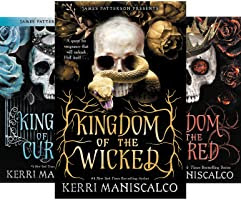
Kingdom of the Feared

Right, let the mass book review begin. I know I keep apologising for being so distracted by YouTube lately, but I am still reading (and writing, but more about that later). Some of these might be speed reviews as I run to catch up.
The first book I finished in 2023 was the final instalment of the Kingdom of the Wicked series. Unusually for me, I'd put it on pre-order. I don't read a lot of series, but this one caught my attention for the feisty, unapologetically sexual female protagonist in the first book (Kingdom of the Wicked). I also really enjoyed the second instalment, Kingdom of the Cursed. But this one didn't quite do it for me.
Everything that was so original in the first book seemed to become a bit stale by the third. I'm maybe being completely unjust here, but it felt like a case of the publisher pushing the author for a conclusion the author wasn't entirely ready to tell yet. The sex seemed a bit repetitive and the plot seemed like an afterthought.
You could join them up there, experience the power of two sins at once. Those body adornments they wear enhance every sensation. Imagine how those pearls would feel as they slid over sensitive flesh, hitting areas of pleasure inside you never dreamed of.
If you do want to explore that concept more, check out Gaijin.
You can only keep readers in a state of arousal for so long, and if it's not quite doing it for them, what else you got?
I know it's all very subjective, and I am looking at this through mature adult eyes. I'm probably not the key audience here. But the main reason I didn't love it was more to do with the character development. Again, a very personal thing, but I get a bit put out by books that turn demons into just misunderstood good guys. Beauty and the Beast syndrome - every guy can be tamed if you just take the time to get to know them properly. To me, it feels a little boring. If that's the case, why make them demons in the first place? Why not just choose any troubled misfit? I feel like, if you're going to go for the seven deadly sins, you really need to play that large. Give a genuine sense of danger and derangement. Sure, it's a YA book, but if it's mature enough to handle erotica, it can handle the rest?
I don't know. I didn't actively dislike it, but I didn't feel it lived up to the other two books. I found some of the repeated phrases like oh, goddess above, a bit irritating by the end, just because they came up so often. The ending was quite good, I see how everything fits together, just about, and it seems to be the set-up for more books to come, but I think I've had my fill for now. I think it's very difficult on authors to write ongoing series. Often the first couple of books are crammed with fantastic ideas and a huge amount of energy, but the pressure, as with film directors and musicians, to keep pumping out the same standard as quickly as possible is too much to ask. You can either be patient and have a really outstanding book, or you can pressure a writer to keep delivering and get a lot of the same stuff over and over because they haven't had time to imagine something fresh. I'm not saying that's exactly what happened here, it just felt a bit like it might have.
From this day forward, a curse will sweep through this land. You will forget all but your hate. Love, kindness, every good thing in your world will cease. One day that will change. When you know true happiness, I vow to take whatever you love, too.
I think it's also difficult when you include characters like Circe, who have been so totally owned by other authors, notably Madeline Miller. Once you've met her through Miller's eyes, no other representation quite fits. She was so completely and potently brought to life.
Anyway, I still like the overall concept. The whole Kingdom of... titles and cover art are delicious. Just needed a little more plot than pleasure.
Friday, 18 November 2022
Good Omens
 |
Ah, loved this.
Terry Pratchett was one of the first adult authors I tried to read as a kid. I turned up to my reading session aged ten with a copy of The Light Fantastic because I liked the woman with big boobs on the front. I think I was hoping to shock my teacher with the cover art and my ability to read out loud. Kind of worked. I had a very good vocabulary for my age, I was an avid reader, but I have to admit I had no real idea what was going on in the story. In my teens, I think I devoured almost all of the Discworld books, and I was privileged to get to see Pratchett speak at the Cheltenham Literature Festival in 2012. The guy was a legend, as is Neil Gaiman. Loved MirrorMask, The Tragical Comedy or Comical Tragedy of Mr. Punch, The Graveyard Book, Sandman adaptation... what's not to love?
It's been years since I've read Pratchett though. I've heard so much about this one, so when it came up on Audible I went for it. It was just what you'd expect of a Pratchett-Gaiman collaboration. Wonderfully silly at every turn.
Satan (A Fallen Angel; the Adversary)
Beelzebub (A Likewise Fallen Angel and Prince of Hell)
Hastur (A Fallen Angel and Duke of Hell)
Ligur (Likewise a Fallen Angel and Duke of Hell)
Crowley (An Angel who did not so much Fall as Saunter Vaguely Downwards)
*
They always are. That's the whole point. Two of them lurked in the ruined graveyard. Two shadowy figures, one hunched and squat, the other lean and menacing, both of them Olympic-grade lurkers. If Bruce Springsteen had ever recorded "Born to Lurk," these two would have been on the album cover.
*
At night, Nanny Ashtoreth sang nursery rhymes to Warlock.
Oh, the grand old Duke of YorkHe had Ten Thousand MenHe Marched them Up To The Top of The HillAnd Crushed all the nations of the world and brought themunder the rule of Satan our master.*
It might have interested Newt to know that, of the thirty-nine thousand women tested with the pin during the centuries of witch-hunting, twenty-nine thousand said "ouch," nine thousand, nine hundred and ninety-nine didn't feel anything because of the use of the aforesaid retractable pins, and one witch declared that it had miraculously cleared up the arthritis in her leg.
*
London was not designed for cars. Come to that, it wasn't designed for people. It just sort of happened. This created problems, and the solutions that were implemented became the next problems, five or ten or a hundred years down the line.
*
A screaming, glowing ribbon of pain and dark light. [NB: Not actually an oxymoron. It's the color past ultra-violet. The technical term for it is infra-black. It can be seen quite easily under experimental conditions. To perform the experiment simply select a healthy brick wall with a good run-up, and, lowering your head, charge. The color that flashes in bursts behind your eyes, behind the pain, just before you die, is infra-black.]
It is now my ambition to learn to lean like an attractive yawn on legs.
The only thing is, when you've been away from that type of wit for so long, it's so fast-paced you sometimes miss large chunks, especially as an audiobook. There's some clever wordplay and a pun every few sentences. Even though it's a comedy, it's not one of those you can easily drift in and out of and keep the thread, so maybe best in book format, though it was very well narrated. Really enjoyed it.
Wednesday, 9 November 2022
Women and Madness

Well, it's been a while. Bear with me. This is going to turn into a book review blog for a few weeks, then maybe I'll talk about other things. If you wan to see more regular posts by me, I'm over on YouTube more nowadays. That in itself is a whole other discussion and I will explain at a later date. Meanwhile, there's a heap of reading I haven't reviewed, so here goes.
I took a heap of notes during this one, and now I don't think I can comb back through them all, so I'm going to go off memory, which might be slightly hazy as I read it a few months back now. I truly have been shocking at keeping up with my blog.
The key points:
Most of what it covered wasn't a big surprise. It shone a light on how mental health has been used over the generations to repress women and twist them into believing that quite normal emotional reactions and desires are somehow wrong and warped. That they are hysterical, over-reacting, irrational and angry. As it quotes another author, Nzinga Shaka Zulu: 'therapists are often the soft police of the dominant culture.'
It refers a lot to Greek mythology, which I enjoyed. Looking at power dynamics and relations between mothers and their daughters. It reminded me a bit of Charlotte Keatley's play My Mother Said I Never Should, in that respect. She also goes into the mother/whore dichotomy.
There were many examples of how a predominantly male system, and male therapists, abused their power to elicit sex and other favours from female clients, often turning against them or casting them aside at a later date, yet strangely, both men and women generally prefer male therapists and spend longer seeing them.
I appreciated that Chesler devotes quite a bit of time to discussing the difference in experience between straight and gay women, and between white and black women. All of the lesbians she interviewed had been classified as sick by therapists and psychiatrists, some given shock therapy. Chilling stuff, considering how very recent that history is.
There were a few statements I didn't agree with, none of which I can remember offhand at the moment, but I think they generally revolved around slightly outdated stereotypes of women and their place in society. The book was originally written in the 70s, and it does have a bit of a didactic quality to it which niggled occasionally.
I'm not entirely sure if this was the book itself or the audio narration. I have to say, I did struggle with this one as an audiobook. The only way to describe the tone of narration is sardonic. At first it feels a bit nudge-nudge, wink-wink, we're all in this together, aren't these people who hold such outdates views ridiculous, but after an hour or two it just starts to grate. You feel like saying, 'just talk to me like a normal person,' rather than trying to rile my outrage. I picture the narrator sitting in a leather-sofa library, narrating with a bourbon in hand and a cigarette in a foot-long holder, ruby-red lips curled in distain between puffs. The questions never come across as genuine questions but always rhetorical.
That's not to say that the book isn't good or insightful, just to say, probably best get the tree copy.
Wednesday, 14 September 2022
Whisper Down the Lane
 |
I picked up a copy of this after seeing a Twitter recommendation.

Inspired by the McMartin preschool trials and the Satanic Panic of the ’80s, the critically acclaimed author of The Remaking delivers another pulse-pounding, true-crime-based horror novel.Richard doesn’t have a past. For him, there is only the present: a new marriage to Tamara, a first chance at fatherhood to her son, Elijah, and a quiet but pleasant life as an art teacher at Elijah’s elementary school in Danvers, Virginia. Then the body of a rabbit, ritualistically murdered, appears on the school grounds with a birthday card for Richard tucked beneath it. Richard doesn’t have a birthday - but Sean does....Sean is a five-year-old boy who has just moved to Greenfield, Virginia, with his mother. Like most mothers of the 1980s, she’s worried about bills, childcare, putting food on the table...and an encroaching threat to American life that can take the face of anyone: a politician, a friendly neighbor, or even a teacher. When Sean’s school sends a letter to the parents revealing that Sean’s favorite teacher is under investigation, a white lie from Sean lights a fire that engulfs the entire nation - and Sean and his mother are left holding the match.Now, 30 years later, someone is here to remind Richard that they remember what Sean did. And though Sean doesn’t exist anymore, someone needs to pay the price for his lies.
A short review, but an appreciative one. I really enjoyed this atmospheric period horror.
They found Professor Howdy spread across the soccer field. What was left of him, anyway. His chest cavity had been carefully cracked open, his rib cage fanning back as if it were the glistening crimson trigger hairs on a Venus fly trap, patiently waiting for its prey to wander inside its gaping maw. The entirety of his intestines, large and small, had been gingerly unspooled to the end of their connective tissues across the lawn, in some sort of luminous pattern.
*
His kids formed a ring on the floor, knees touching. Mr Woodhouse would ask his students to talk about their favourite part of the day and least-favourite part of the day. "What's your rose and what's your thorn?"
Its author, Clay McLeod Chapman, writes books and comics, described as, 'a horror-drunk storytelling virtuoso master idiot' by Time Out New York. Not much else to say than, if you like dark, Satan-worshiping psychological horror, this is worth picking up. It's good fun.
Tuesday, 9 August 2022
Six-Minute X-Ray

Short review as I've got a few books that I've finished recently and falling behind.
In Six Minute X-Ray, you’ll learn the most powerful people-reading system in the world. Chase exposes and unpacks simple techniques that come together to allow you to see beyond the mask that anyone is wearing.
I fell into this during the Depp v. Heard trial. Like a lot of people, I thought I'd have no interest in that at all, who cares what celebs get up to in their personal life? (No, don't answer that, as I suspect it might be 'a lot of people'). But I became engrossed when it turned into a case of 'bloke accused of abuse' becomes 'victim of abuse.' A very interesting revelation and one that challenged a lot of social preconceptions.
I do enjoy a bit of behavioural analysis, and read Joe Navarro's book What Every Body is Saying, years ago. I recommended it to my English students when I was lecturing, to try to raise awareness that not everything we communicate is verbal.
During the trial, I stumbled upon The Behavioural Arts channel by mentalist Spidey. He had the author of this book on there, analysing body language, and recommended Six-Minute X-ray a few times, so I thought I'd check it out. I was a bit surprised to discover Chase Hughes was American, as the audiobook is narrated by a Brit.
I enjoyed it, especially the chapters on language, as I am a linguist. I did an MA in Language & Communication Research, which covered a lot of sociolinguistics (how languages is affected my situation and culture) and forensic linguistics (idiolect and identifying linguistic patterns). Some interesting stuff in there about linguistic distancing and use of pronouns.
I knew quite a few of the body language indicators, but there were definitely a few things in there I wasn't aware of. I think, with body language, a lot of it is very instinctive, because we've been watching for boy language our entire lives, but because it's so natural we tend to miss a lot. Books like this just bring things to the forefront. By listening to them a couple of times, we become naturally more aware of the way people speak and move. It can just give you a little heads-up sometimes.
I enjoyed this and would recommend if you're interested in body language. As Spidey regularly points out, there's no one action or reaction that definitively tells you someone is lying, but there are clusters of behaviour that increase that likelihood.
I have to admit, I was sceptical once upon a time, but Joe Navarro convinced me. I'd just finished reading What Every Body is Saying and there was a part in there that said the direction someone's feet are pointing are usually a good indication of where they intend to go next. I was down the village pub with my mum and some friends. One of our friends was saying his goodbyes, but his foot was pointing towards the main room in the pub, not the door. I looked at this and thought, 'well, that's bollocks isn't it.' But just as he was finishing his goodbyes, he said 'right, I'm just going to pop to the loo before I go,' and walked the way his foot was pointing. I honestly believe he indicated that he needed the toilet before he was even consciously aware of it. The direction of his foot really was the direction he went in, even though everybody expected him to head straight for the door from his words. I've never forgotten that. It was kind of fascinating.
Sunday, 24 July 2022
The Pig that Wants to be Eaten
 |
It's been a while since I posted, so here's a review. This one was very interesting:
Perfect for gifting to lovers of philosophy or mining intelligent ice-breaker topics for your next party, The Pig That Wants to Be Eaten offers one hundred philosophical puzzles that stimulate thought on a host of moral, social, and personal dilemmas. Taking examples from sources as diverse as Plato and Steven Spielberg, author Julian Baggini presents abstract philosophical issues in concrete terms, suggesting possible solutions while encouraging readers to draw their own conclusions:
Lively, clever, and thought-provoking, The Pig That Wants to Be Eaten is a portable feast for the mind that is sure to satisfy any intellectual appetite.
It's packed with very short chapters, each starting with a
quote that poses a thought experiment. Something to cogitate over whilst stirring
your morning coffee, sitting on the loo or drifting off to sleep. The subject
matter is extremely broad and rather deep, covering everything from the existence
of God, abortion, and personal identity through to freedom of speech and
conspiracy theories. Some of my favourites were the discussions on faith. I
feel that one of the more horrific aspects of monotheistic religions is the way
they take away an individual's belief in themself as a moral entity from birth.
This idea that we are not born with a moral compass, and that this is only
bestowed upon us when we listen to this preacher or that preacher, read this
passage or that passage, go to confession, take communion, cover your face...
whatever. Morality isn't the dominion of religion, it goes far beyond that.
People may be drawn to religion because they have been brought up that way or
because a particular religion aligns with moral values they already hold, but
generally speaking, religion itself doesn't appear to define an individual's
moral values in and of itself. That's my personal assessment. People are as
likely to be 'good' people or 'bad' people regardless of whether they follow,
or do not follow, a given doctrine. This concept of sin, especially original
sin, and terrifying children from a young age with the idea of eternal
damnation, makes my skin crawl. The world is a fascinating, beautiful, comedic,
tragic and oft-times unfathomable place with complexity and nuance at every
turn. We were born to navigate that. So, the question of whether [insert name
of deity here] makes a difference to the course we steer is an interesting one
to me. There's a well-reasoned argument against the authority of religion over
morality:
When I was at school, we used to sing a hymn in which God was equated with virtually every positive attribute. We sang that God is love, God is good, God is truth, and God is beauty. No wonder the chorus ended ‘praise him!’.
The idea that God is good, however, is ambiguous. It could mean that God is good in the same way that cake is good, or Jo is good. In these cases, ‘is’ functions to attribute a quality or property to something, such as goodness or blueness. Equally, however, ‘God is good’ could be a sentence like ‘Water is H2O’ or ‘Plato is the author of The Republic’. Here, ‘is’ indicates an identity between the two terms: the one thing is identical to the other.
In the hymn, the ‘is’ seemed to be one of identity, not attribution. God is not loving but love; not beautiful but beauty. God doesn’t just have these fine qualities, he is them. Hence ‘God is good’ implies that the notions of God and goodness are inextricably linked, that the essence of the good is God.
If this is so, then it is no wonder that many believe that there can be no morality without God. If goodness and Godness cannot be separated, secular morality is a contradiction in terms.
However, our imaginary conversation seems to demonstrate very clearly and simply that this cannot be so. If God is good, it is because God is and chooses to do what is already good. God doesn’t make something good by choosing it; he chooses it because it is good.
Some might protest that this argument works only because it separates what cannot be separated. If God really is good, then it doesn’t make sense to pose a dilemma in which the good and God are distinguished. But since it seems to make perfect sense to ask whether the good is good because God commands it, or God commands it because it is good, this objection simply begs the question.
Even if God and the good really were one, it would still be reasonable to ask what makes this identity true. The answer would surely be that we know what good is and it is this which would enable us to say truly that God is good. If God advocated pointless torture, we would know that he was not good. This shows that we can understand the nature of goodness independently of God. And that shows that a godless morality is not an oxymoron.
*
And what are we finally left with? A God who leaves no trace, makes no sound and interferes not one jot in the progress of the universe. A few miracles are claimed here and there, but even most religious believers don’t seriously believe in them. Other than that, God is absent. We do not see as much as his fingernail in nature, let alone his hand. What then is the difference between this God and no god at all? Is it not as foolish to maintain that he exists as it is to insist that a gardener tends the clearing Livingston and Stanley discovered? If God is to be more than a word or a hope, surely we need some sign that he is active in the world?...
As a response this can seem unsatisfactory. For what it adds up to is the claim that, if ever we are presented with rational reasons to doubt the existence of God, we simply have to accept that our intellects are finite and that what might seem irrational or contradictory does make sense from the divine point of view. But that just means dismissing the role of rationality in religious belief. And you can’t have it both ways. It’s no use defending your belief using reason on one occasion, if you don’t accept that a reasoned argument against belief has any force.
*
Morality is a higher authority than the law. That is why we approve of civil disobedience when the state’s laws are manifestly unjust and there are no legal ways to oppose them.
As Rosa Luxemburg would put it, 'freedom is always the freedom of dissenters.'
I also learned the term 'supererogatory behaviour,' which is apparently, 'when someone does something good which goes beyond what is demanded of them by morality.
I think my favourite, however, was the argument against multiculturalism. As someone who lives outside of my own culture, but sees my culture seeping into the daily lives of those around me more and more, I'm in a constant state of concern. I feel like the world is getting smaller, and that global internet culture is wiping out local, cultural culture, as it were. I've seen certain mannerisms and behaviours disappear over my fifteen years in Rwanda, from men holding hands in public to people hissing to get the attention of a waiter or moto driver. Things that have been dropped since Rwandans discovered they have a different meaning for foreign tourists. I'm always in two states. I miss those things, because they seemed so Rwandan when I first arrived, and gave me a sense of being in a different world at times, but I also like the idea of a united, global world where everyone has the same rights, freedoms, and access to information and technology (preferably a socialist world with free housing and universal basic income, but, one step at a time...) so, even as I morn the loss of certain things, I like the sense of people around the world becoming closer and understanding each other more easily. This particular chapter definitely made me laugh, because I see the issue, but I still long for a little bit of raw adventure in uncharted territories and exotic locations. A longing to explore the 'other'. It's a tough one to grapple with...
There is a problem at the heart of liberal multiculturalism. It advocates respect for other cultures, but what it values above all is the ability to transcend one culture and value many. This places a major constraint on the extent of its respect. The ideal person is the multiculturalist who can visit a mosque, read Hindu scriptures and practise Buddhist meditation. Those who remain within one tradition do not embody these ideals, and so, despite the talk of ‘respect’, they can be seen only as inferior to the open-minded multiculturalist.
There is something of the zoo mentality in this. The multiculturalist wants to go around admiring different ways of living, but can do this only if various forms of life are kept more or less intact. Different subcultures in society are thus like cages, and if too many people move in or out of them, they become less interesting for the multiculturalist to point and smile at. If everyone were as culturally promiscuous as they were, there would be less genuine diversity to revel in. And so the multiculturalists must remain an elite, parasitic on internally homogenous monocultures.
It may be argued that it is possible to be both a multiculturalist and committed to one particular culture. The paradigm here is of the devout Muslim or Christian who nonetheless has a profound respect for other religions and belief systems and is always prepared to learn from them. However, tolerance and respect for other cultures are not the same as valuing all cultures more or less equally. For the multiculturalist, the best point of view is the one which sees merit in all. But one cannot be a committed Christian, Muslim, Jew or even atheist and sincerely believe this. There may be tolerance, or even respect, for other cultures, but if a Christian really believed that Islam is as valuable as Christianity, why would they be a Christian?
This is the multiculturalist’s dilemma. You can have a society of many cultures which respect each other. Call that multiculturalism if you want. But if you want to champion a multiculturalism which values diversity itself and sees all cultures as of equal merit, then you either have to accept that those who live within just one culture have an inferior form of life – which seems to go against the idea of respect for all cultures – or you have to argue for erosion of divisions between distinct cultures, so that people value more and more in the cultures of others – which will lead to a decrease in the kind of diversity you claim to value.
In our concrete example, for Saskia to continue to enjoy a diversity of cultures, she must hope that others do not embrace multiculturalism as fully as she has.
So, an enjoyable read. I think the only problem with books like these, where it's one information burst after another, is that it's better just to read one chapter a day, rather than listening to it all at once, otherwise the queries all start to bleed into one and you zone out a little. But this was good fun.
Monday, 4 July 2022
The Stone Knife
 |
For generations, the forests of Ixachipan have echoed with the clash of weapons, as nation after nation has fallen to the Empire of Songs – and to the unending, magical music that binds its people together. Now, only two free tribes remain.
The Empire is not their only enemy. Monstrous, scaled predators lurk in rivers and streams, with a deadly music of their own.
As battle looms, fighters on both sides must decide how far they will go for their beliefs and for the ones they love – a veteran general seeks peace through war, a warrior and a shaman set out to understand their enemies, and an ambitious noble tries to bend ancient magic to her will.
A really excellent piece of high fantasy. Annoyingly, I know that I picked it up from a Twitter recommendation, the same person who recommended Kingdom of the Wicked. I can't remember who that was, and it's driving me nuts because I really enjoyed both of them.
This took me a moment to get into as it's quite complex and there are a lot of different tribes and unfamiliar names. I actually think the Audiobook is an advantage here because, left to my own attempts at pronunciation, I probably wouldn't have got half the characters correct.
It's nice in that two of the main characters are gay and one is deaf, but their inclusion feels natural rather than forced. It doesn't feel like they've been placed there as a token of diversity, but as part of a whole and many-faceted world. Their characters are completely developed and, in Xessa's case, the fact that her deafness proves an advantage to her community and to her own safety, is nicely woven in. There's some really nice details about the various cultures which make them feel real.
Lilla reached out and ran his finger along the pale, yellow marriage cord resting on Tayan's collar bones, its twin tied around his own throat. The cords were knotted with promises and some were hung with tiny charms that meant those promises were fulfilled. A life mapped out. A life shared.
*
The Macaws, wearing their scarlet feather, patrolled to either side of the long line of captives. They were half-blood Pechaqueh, a step below elite, a step above the no-blood slaves and dogs. Scattered among them were the secretive, anonymous, whispers. More rumour than fact, more legend than living. Every warrior wore a peace feather above one ear, and that covenant was sacred.
There were a lot of parallels with human history in this. Although the book carried strong undertones of South America, it also brought to mind Liberian history, where those who had been removed from their culture, broken down and remade in their masters' image found themselves perpetuating that abuse once free. A cycle of racial segregation perpetuated by generations of dehumanisation and stripped identity. It's a pattern repeated throughout history where the oppressed become the oppressors, and it's very neatly summed up here:
The whole empire was a lie, a deceit built on suffering... they threatened the people you loved and then they stripped away who you were. They turned you into an animal and then slowly, they built you back up in their own image until their beliefs were yours. And one day, if you were very obedient and very lucky, they'd free you, and the first thing you'd do would be to buy slaves of your own. And so it went, rolling endlessly, like the cycle of the seasons. Like the rise and fall of the great star at morning and the great star at evening.
A lot to unpack and think on there.
That's what I liked about this. It was thinking fantasy. There was a lot you could equate to our own world, but enough differences to keep it interesting. I'm looking forward to the next instalment.
Wednesday, 29 June 2022
The City and the Stars

This one crept under my skin:
Men had built cities before, but never such a city as Diaspar; for millennia its protective dome shut out the creeping decay and danger of the world outside. Once, it ruled the stars. But then, as legend had it, the Invaders came, driving humanity into this last refuge. It takes one man, a Unique, to smash the legend and discover the true nature of the Invaders.
It's the first Arthur C Clarke I have ever read, and one of those legendary names you know you should get around to at some point. The first thing that really stood out was that this book was first published in 1956, yet it feels so contemporary. It could have been written a decade ago or less. The second thing was that, in parts, I thought I heard the voice of Douglas Adams. There was a sort of dry wit about it that made me think that Alvin and Arthur Dent probably would have gotten along.
In a 2000 interview, Adams said:
When I originally described The Hitchhiker's Guide to the Galaxy, over twenty years ago, I was only joking. I didn't see myself as a predictive kind of science fiction writer, like Arthur C. Clarke who more or less single-handedly invented the communications satellite. The Guide was just a narrative device which allowed me to run off at tangents whenever the story seemed to be getting a bit dull.
You know what else Clarke predicted? The freakin' Metaverse:
Of all the thousands of forms of recreation in the city, these were the most popular. When you entered a saga, you were not merely a passive observer, as in the crude entertainments of primitive times which Alvin had sometimes sampled. You were an active participant and possessed or seemed to possess free will. The events and scenes which were the raw material of your adventures might have been prepared beforehand by forgotten artists, but there was enough flexibility to allow for wide variation. You could go into these phantom worlds with your friends, seeking the excitement that did not exist in Diaspar and as long as the dream lasted there was no way in which it could be distinguished from reality. Indeed, who could be certain that Diaspar itself was not the dream? No one could ever exhaust all the sagas that had been conceived and recorded since the city began. They played upon all the emotions and were of infinitely varying subtlety.
Spooky, huh? What seems so obvious today with our VR headsets, must have appeared completely preposterous back when this was first published.
Though, there was one little line that really stood out as a watermark of its time...
Yet perhaps her motives were not entirely selfish, and were maternal rather than sexual. Though birth had been forgotten, the feminine instincts of protection and sympathy still remained.
Oooh, yuck, yuck, yuck.
But it was the 50s, so I guess we can forgive.
I really did enjoy parts of this, especially this bit, which made me stop and think. I'm a huge Star Trek fan and, all of my early years, I enjoyed programs about space exploration and other planets - exploring the stars. But I think I always thought like everybody else - that we would find our equals among the stars, but not that the stars would destroy us with our own insignificance and force us further into ourselves. It's quite an interesting consideration:
Despite his failures, man had never doubted that one day he would conquer the depths of space. He believed too that if the universe held his equals, it did not hold his superiors. Now he knew that both beliefs were wrong, and that out among the stars were minds far greater than his own. For many centuries, first in the ships of other races and later in machines built with borrowed knowledge, man had explored the galaxy. Everywhere he found cultures he could understand but could not match, and here and there he encountered minds which would soon have passed altogether beyond his comprehension. The shock was tremendous, but it proved the making of the race. Sadder and infinitely wiser, man had returned to the solar system to brood upon the knowledge he had gained.
Star Trek certainly would have been a very different sort of programme based on that premise.
I did enjoy this passage on religion. Travelling and observing people and cultures around the world, it's hard not to be persuaded that progress is largely secular in nature:
While still a young man, he had been forced to leave his native world, and its memory had haunted him all his life. His expulsion he blamed on vindictive enemies, but the fact was that he suffered from an incurable malady which, it seemed, attacked only homo sapiens among all the intelligent races of the universe. That disease was religious mania. Throughout the earlier part of its history, the human race had brought forth an endless succession of prophets, seers, messiahs, and evangelists who convinced themselves and their followers that to them alone were the secrets of the universe revealed. Some of them succeeded in establishing religions which survived for many generations and influenced billions of men; others were forgotten even before their deaths. The rise of science, which with monotonous regularity refuted the cosmologies of the prophets and produced miracles which they could never match, eventually destroyed all these faiths. It did not destroy the awe, nor the reverence and humility, which all intelligent beings felt as they contemplated the stupendous universe in which they found themselves. What it did weaken and finally obliterate, were the countless religions, each of which claimed with unbelievable arrogance, that it was the sole repository of the truth and that its millions of rivals and predecessors were all mistaken. Yet, though they never possessed any real power once humanity had reached a very elementary level of civilization, all down the ages isolated cults had continued to appear, and however fantastic their creeds they had always managed to attract some disciples. They thrived with particular strength during the periods of confusion and disorder, and it was not surprising that the transition centuries had seen a great outburst of irrationality. When the reality was depressing, men tried to console themselves with myths.
It also reminded me a little of Scythe with the concept of Central Computer caring for and regulating a society of immortal humans for whom disease and death are but a distant memory. Also love Great Polyp.
I shall leave you with this last little quote, and recommend The City and the Stars as rather a good read. As is The City & The City... in fact, anything with 'city' in it:
There is a special sadness in achievement, in the knowledge that a long-desired goal has been attained at last, and that life must now be shaped toward new ends.
Monday, 20 June 2022
The Way of All Flesh

This is the first in the Raven and Fisher Mystery trilogy.
Edinburgh, 1847. City of Medicine, Money, Murder. Young women are being discovered dead across the Old Town, all having suffered similarly gruesome ends. In the New Town, medical student Will Raven is about to start his apprenticeship with the brilliant and renowned Dr Simpson. Simpson’s patients range from the richest to the poorest of this divided city. His house is like no other, full of visiting luminaries and daring experiments in the new medical frontier of anaesthesia. It is here that Raven meets housemaid Sarah Fisher, who recognises trouble when she sees it and takes an immediate dislike to him. She has all of his intelligence but none of his privileges, in particular his medical education. With each having their own motive to look deeper into these deaths, Raven and Sarah find themselves propelled headlong into the darkest shadows of Edinburgh’s underworld, where they will have to overcome their differences if they are to make it out alive.
I was slightly confused when it got to the very end of the book and the credits mentioned Christopher Brookmyre. I saw him at the Cheltenham Literature Festival years ago, with Jasper Fforde. So I went to look this up and apparently:
Ambrose Parry is a pseudonym for a collaboration between Chris Brookmyre and Marisa Haetzman.
I found that a fascinating concept that two authors could combine to create an entirely new author. What a wonderful idea.
I also enjoyed the nod to Barry Lyndon. I mentioned that recently in my review of Thackeray's other work, Vanity Fair. Though I must admit, I was a bit uncertain with the title for this one as I was sure The Way of All Flesh was already quite a famous novel. When I looked it up, it was a 'a semi-autobiographical novel by Samuel Butler.' Apparently it was a satire about the Victorian bourgeois.
There was some great opening descriptive of Gargantua unfolding into this great, hulking henchman. It reminded me so clearly of the blob men unfolding in the animation of Howl's Moving Castle. Very evocative of a visual style.

Also some nice observations on human nature:
He would simply have to endure it. His time at Herriot's had taught him that sometimes people could take an instinctive or irrational dislike to you, as you could to them. In such instances there was nothing you could do to change that and it proved a fool's errand to try.
And I smiled at the detailed description of how to make a calotype. They handled it with more grace and economy than I did in Secure the Shadow. It's a lengthy and tricky process, and not easily put to paper. They did it the same way I did, having the expert explain it to the neophyte in a friendly and instructive manor. I suppose the other way you could do it would be to have the expert observe themself making the photograph, but dialogue pulls people in and holds attention much better. Just for kicks, I wonder if you could write it as the photograph becoming aware of its own existence as the latent image strengthens and becomes fixed? An interesting short story, perhaps?
I counted three instances where the main characters were forced into a tight space together, inches apart. I'm not sure whether it was intentionally three - as in, third time lucky - or just a motif that the authors really, really liked.
All in all though, a good read. Great suspense as Raven is racing to the dinner party. Likeable protagonists and a solid whodunnit.
Subscribe to:
Comments (Atom)